House of Aama and COMOCO’s Black-grown cotton collaboration asks whether a fiber bound to Black exploitation can become a source of Black ownership, sustainability and power.
By Lisa N. Alexander

I grew up avoiding Louisiana, though not of my own doing.
My mother was a city girl who did not do country well. She never sent her daughters there for the summer, and she did not make us travel with our grandmother when she went. I was well into adulthood before I finally visited the place where so much of my family’s history lived.
By then, I was a Texan. The landscape of northern Louisiana did not feel foreign; it looked much like parts of the state I called home. But the history beneath it was distinctly my own.
My cousin Clarence, our family historian, showed me the field where my nana and other relatives sharecropped and picked cotton. Cotton still grows there.
My roots in that community reach back generations. My mother, my sister and my nana are buried in a church cemetery dating to the 1800s, among the Martins, Taylors and Bradfords who make up our family line. I was not encountering an abstract chapter of Southern history. I was standing in a place where my own people had lived, labored, worshipped and been laid to rest.
Today, cotton imagery lives inside my home. When I found vases decorated with cotton, I bought them. When I moved from Texas to California, I made certain they traveled with me. They do not erase what cotton represented in my family’s history. They allow me to remember it on my own terms.
That complicated act of remembering is at the center of a collaboration between House of Aama and COMOCO Cotton, the company founded by food writer and media entrepreneur Stephen Satterfield.
From oppression to ownership
For its spring/summer 2026 collection, Folk Grounds, House of Aama partnered with COMOCO to introduce the Aama Sustainability Initiative. The Los Angeles fashion label, founded by mother-daughter design team Rebecca Henry and Akua Shabaka, describes the initiative as an effort to build a vertical supply chain with Black farmers in the South and revive Black-grown cotton in the United States.
The collaboration currently includes a $90 John Henry graphic T-shirt made from cotton in North Carolina and a $40 John Henry shop rag made from recycled cotton scraps. Both pieces are made to order. House of Aama lists a shipping window of two to three weeks.
The company says the partnership is intended to transform cotton from a symbol of historical oppression into one of empowerment and sustainability while creating economic opportunities for Black agricultural communities.
It is an ambitious proposition because cotton has never been only a textile for Black Americans.
The crop is inseparable from the stolen labor that built enormous American wealth. After emancipation, sharecropping and other exploitative arrangements kept many Black families tied to the same land and trapped in debt. Even when Black farmers acquired land of their own, discriminatory lending, violence, dispossession and government policy helped drive generations of them from agriculture. A USDA history of Black farming documents the long decline in Black farm ownership and the barriers Black farmers faced in acquiring and retaining land.
That history remains close enough to touch. For many families, cotton is not a distant symbol. It is a story told by a grandparent, the memory of a sack that had to be filled or a field still visible from a country road.
House of Aama is not asking Black people to forget that history. The more interesting question raised by its partnership with COMOCO is whether changing who grows the cotton, who controls its journey and who benefits from its sale can change what the fiber makes possible now.
The price of building something different
This is not the first attempt to redirect more of fashion’s cotton economy through Black hands.
In 2021, activist Shaun King launched A Real One, an apparel company he said took nearly two years to build. The company describes its clothing as made by Black people at each stage of production, “from the farm to your closet,” and says it works with Black farmers, designers, printers, sewers, financial partners and a Black woman-owned fulfillment center.
The launch exposed a tension that continues to confront Black-owned businesses: Consumers may celebrate economic independence in principle while resisting its actual cost.
A garment produced outside the conventional fashion system cannot always compete with the price of one made through enormous global supply chains built to suppress labor and material costs. What looks like a simple T-shirt may carry the expense of creating relationships and infrastructure that the mainstream industry has never made readily available.
That does not mean every price attached to a Black-owned product should go unquestioned. It means price alone cannot tell us what we are paying for. We should be willing to ask who grew the fiber, who turned it into fabric, who sewed the garment and who was paid along the way.
The timing may create an opportunity. A growing number of shoppers, including younger consumers and thrifters, are reading clothing labels and seeking natural fibers such as cotton, linen, wool and silk. Cotton Incorporated reported in 2025 that 61% of Gen Z consumers were willing to pay more for natural fibers. Whether Black consumers will embrace Black-grown cotton beyond T-shirts, underwear and socks remains an open question. I have been intentionally choosing natural fibers for more than two years, from the clothing I wear to the bedding in my home. As more consumers become interested in how textiles feel, how long they last and what they are made from, Black-grown cotton may have an opportunity to move beyond the basics.
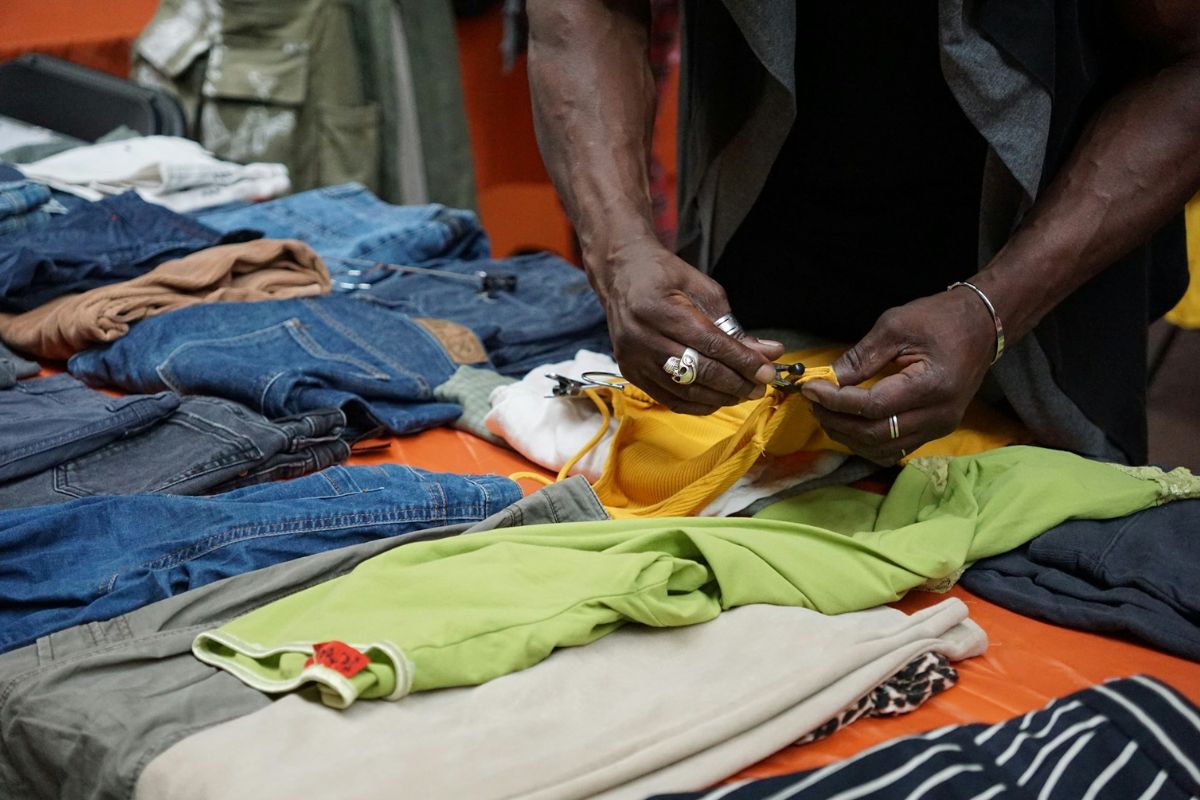
COMOCO is making a similar argument through traceability. The company describes its cotton as Black-grown, American-made and fully documented. Its own collection includes shirts and socks made with what it calls Certified Black Grown cotton, as well as wholesale blanks for organizations and retailers.
House of Aama brings that material into a broader story of Black Southern life.
Folk Grounds was inspired by the family history of Henry and Shabaka and by the South Carolina homestead of Henry’s parents and Shabaka’s grandparents, Gilbert and Faye Henry. According to Vogue’s review of the collection, Gilbert Henry grew up in a family that sharecropped cotton and tobacco. The designers drew from family scrapbooks and reimagined home, work, land and memory through florals, lace, gingham and workwear.
The John Henry graphic places the legendary laborer inside that conversation. His story, of a man who raced a machine to defend the value of human work, becomes a fitting emblem for a collection concerned with dignity, labor and the people too often erased from the products their work creates.
Remembering on our own terms
Reclamation is not the same as reconciliation. A Black farmer growing cotton today does not undo slavery. A traceable supply chain does not repair every acre of land taken from Black families. A beautiful garment cannot make exploitation beautiful.
But ownership matters. Control matters. The ability to create wealth from what our ancestors were forced to produce, and to tell the truth about that history while doing it, matters.
So does the freedom to decide that cotton will not be part of one’s personal act of remembrance. No single collection can determine how Black people should relate to a material carrying this much history.
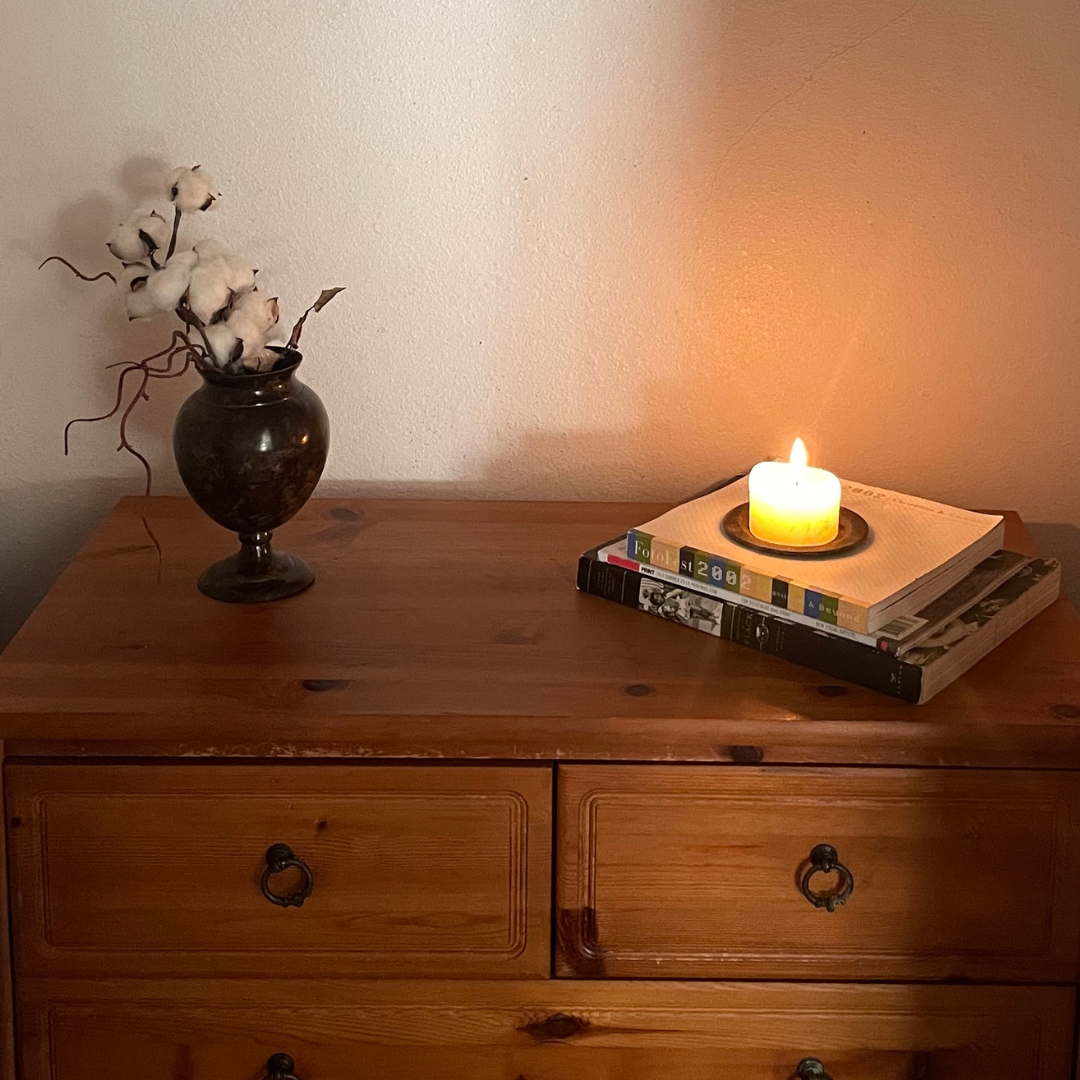
For me, the cotton vases in my home are not a celebration of what happened in that Louisiana field. They are an acknowledgment of who survived it.
My family worked that land. Their bodies rest nearby. Cotton still grows there, and their descendant stood in the field, learned its story and carried the memory west.
House of Aama and COMOCO are asking what it might mean for Black people to participate in cotton’s future not merely as laborers or consumers, but as farmers, owners, designers and storytellers.
Perhaps reclamation begins there: not by separating cotton from its history, but by refusing to let exploitation have the final word.
House of Aama did not respond to a request for comment before publication. Statements about the collaboration and its supply chain are attributed to information published by House of Aama, COMOCO and A Real One.

Lisa N. Alexander is the author and founder of This Woman Knows and What Million-Dollar Brands Know. She is an award-winning filmmaker, director, producer, and writer and is the owner of PrettyWork Creative.